[5][1]...In intellectual circles a traditional atti-
tude has been established towards philosophy....
Philosophical ideas are presented with too little
and too feeble connection with any sort of class
substratum....
Philosophical ideas are presented with too little
and too feeble connection with any sort of class
substratum....
Very many Marxists adhere to the same view.
They are convinced that a variegated medley of
philosophical views is permissible in the ranks
of the proletarian vanguard, that it has no great
significance whether ideologists of the proletariat
profess materialism or energeticism, neo-Kantian-
ism or Machism....
They are convinced that a variegated medley of
philosophical views is permissible in the ranks
of the proletarian vanguard, that it has no great
significance whether ideologists of the proletariat
profess materialism or energeticism, neo-Kantian-
ism or Machism....
[6]...To maintain such a viewpoint means falling
into a naïve, most grievous error.... Without
exception, all philosophical terms and formulas
into a naïve, most grievous error.... Without
exception, all philosophical terms and formulas
used by it[2] ... serve |it| to denote social classes,
groups, sections and their mutual relations. When
groups, sections and their mutual relations. When
dealing with the philosophical system of this or
that bourgeois thinker, we are dealing with a pic-
ture of the class structure of society, depicted by
ture of the class structure of society, depicted by
means of conventional symbols and reproducing
the social profession de foi of a definite bourgeois
group....
the social profession de foi of a definite bourgeois
group....
[7]...These pictures must not be accepted as
being something that could he utilised and brought
into line with the proletarian world outlook. That
would mean falling into opportunism, trying to
combine what cannot be combined....
being something that could he utilised and brought
into line with the proletarian world outlook. That
would mean falling into opportunism, trying to
combine what cannot be combined....
... the first brilliant attempt at this sort of re-
appraisal took place as far back as several years
ago. Comrade A. Bogdanov's article "Authoritarian
ago. Comrade A. Bogdanov's article "Authoritarian
Thought"[3] undoubtedly opens up a new era
in the history of philosophy: after the appearance
of this article, speculative philosophy lost the right
to employ its two fundamental concepts of "mind"
and "body"; it was established that these concepts
of this article, speculative philosophy lost the right
to employ its two fundamental concepts of "mind"
and "body"; it was established that these concepts
were formed against the background of authoritar-
ian relations and the antithesis between them
ian relations and the antithesis between them
nonsense!
reflected a social antithesis-the antithesis of the
organising "top strata" and the executive "lower
strata." With amazing consistency bourgeois critics
ignored the work of the Russian Marxist....
organising "top strata" and the executive "lower
strata." With amazing consistency bourgeois critics
ignored the work of the Russian Marxist....
[8]...In these circumstances, a social and genet-
ic analysis of philosophical concepts and system
ic analysis of philosophical concepts and system
is not only desirable, but definitely necessary.
It is a task which is extremely difficult and com-
plicated.... Contemporary fashionable systems, e.g.,
plicated.... Contemporary fashionable systems, e.g.,
neo-Kantianism or Machism....
[9-10]...Our essay is not intended for a limited
circle of experts.... Demos is revealing an interest
in philosophy... our exposition is of a somewhat
elementary character.... The viewpoint we are
elementary character.... The viewpoint we are
defending .... can be more easily mastered if illustrat-
ed not by unwieldy, but by economically selected
material....
ed not by unwieldy, but by economically selected
material....

I
THE ORGANISING
AND ORGANISED "PRINCIPLES"
[11]...Economic inequality arose; the organis-
ers were gradually transformed into the owners of
the instruments of production,[4] which had once
belonged to society....
ers were gradually transformed into the owners of
the instruments of production,[4] which had once
belonged to society....
[11-12]...Production relations of |"authoritar-
ian"| society... The primitive ||savage|| every-
where begins to see the manifestation of organisa-
tory will "...the executor is accessible to external
where begins to see the manifestation of organisa-
tory will "...the executor is accessible to external
nonsense is
clear!!
senses-this is the physiological organism, the bo-
dy; the organiser is not accessible to them, he is
presumed inside the body; this is the spiritual
personality..."
dy; the organiser is not accessible to them, he is
presumed inside the body; this is the spiritual
personality..."
empty
phrases.
Indeed,
very "gen-
eral" !! Words.
The savage
and primitive
communism
are slurred
over. Mate-
rialism and
idealism in
Greece as well.
[13]...The concept of the mind acquires an in-
creasingly abstract character.
creasingly abstract character.
idealism!
[14]...When in the history of Greek philosophy
the famous question was raised: How is it possible
for the multifarious transient phenomena of the
material world to have been derived from pure,
immutable, non-material substance? What is the
relation of "being" to "becoming"?-it was not,
contrary to the assertions of all kinds of historians
of philosophy, the highest flight of noble human
thought, a most altruistic effort aimed at solving
the greatest mystery of the universe and thereby
giving joy to the human race for all time. The
matter was much simpler! To frame the question
in that manner merely pointed to the fact that
in the Greek towns the process of social stratifica-
tion had gone a long way, that the gulf between
the "upper" and the "lower" strata of society had
become deeper, and the old ideology of the organis-
ers, corresponding to less differentiated social
the "upper" and the "lower" strata of society had
become deeper, and the old ideology of the organis-
ers, corresponding to less differentiated social
And Greek
materialism?
relations, had lost its right to existence. Earlier,
in spite of all the distinctions between substance
in spite of all the distinctions between substance
and the world of phenomena, the direct connection
between them had not been doubted. Now, the
between them had not been doubted. Now, the
sceptics?
existence of this connection is denied. Substance
and the world of phenomena are declared to be
incommensurable magnitudes. Relations between
them are only possible through a series of inter-
mediary links. Or, in more philosophical language,
we cannot establish their reciprocal relations
either by means of the senses or by means of
ordinary thought: to do so requires the assistance
of some special "idea," some special intuition.
II
ORGANISING AND ORGANISED
"PRINCIPLES" IN THE PERIOD
OF MANUFACTURING PRODUCTION
[15]...This very question-the question of the
incommensurability of the mental and material
"principles," of the absence of a direct connection
between them, was put forward and solved by the
originators of the new philosophy....
incommensurability of the mental and material
"principles," of the absence of a direct connection
between them, was put forward and solved by the
originators of the new philosophy....
[16]...The spiritualistic sympathies of the Re-
naissance and subsequent epoch are usually men-
tioned in passing, but they are very character-
istic.[5]
naissance and subsequent epoch are usually men-
tioned in passing, but they are very character-
istic.[5]
[17]...The medieval artisan, while being an
organiser, at the same time fulfilled executive
functions-he worked together with his appren-
tices. The bourgeois manufacturer knows only one
type of function: he is purely an organiser. In the
first case, it is true, a basis is provided for that
organiser, at the same time fulfilled executive
functions-he worked together with his appren-
tices. The bourgeois manufacturer knows only one
type of function: he is purely an organiser. In the
first case, it is true, a basis is provided for that
dualistic "mode of presenting the facts" explained
by Comrade Bogdanov; nevertheless, the anti-
by Comrade Bogdanov; nevertheless, the anti-
thesis of organiser and executor is somewhat
veiled. Hence the corresponding antithesis of
mental and corporeal, active and passive, prin-
ciples, in the sphere of ideology, could not take
a sharp form....
veiled. Hence the corresponding antithesis of
mental and corporeal, active and passive, prin-
ciples, in the sphere of ideology, could not take
a sharp form....
[17]...In the worskhop of the medieval artisan
there was no place for representatives of so-called
there was no place for representatives of so-called
untrained, unskilled labour. Work is found for
them in the manufacturing workshop. They consti-
tute the "lower stratum." Above them are other
strata, other groups of workers, each differing
according to the degree of skill. Among them
certain organising layers are already formed. Going
them in the manufacturing workshop. They consti-
tute the "lower stratum." Above them are other
strata, other groups of workers, each differing
according to the degree of skill. Among them
certain organising layers are already formed. Going
workers and
trainees un-
der them
further up the ascending scale, we see groups of
administrators and technical managers of the
enterprises. The owner of the enterprise is thus
administrators and technical managers of the
enterprises. The owner of the enterprise is thus
"freed" not only from every kind of physical labour,
but also from many purely organisational duties....
but also from many purely organisational duties....
{19]...In contrast to the medieval thinkers, the
"fathers" of the new philosophy devote very much
attention in their systems to the world of transient
phenomena, make a detailed study of its structure
attention in their systems to the world of transient
phenomena, make a detailed study of its structure
and development, the laws governing the relations
between its parts; they create a natural philosophy.
The very same "elevated" position of the leaders
of the manufacturing enterprises which inspired in
the fathers of the new philosophy the "pure" idea
between its parts; they create a natural philosophy.
The very same "elevated" position of the leaders
of the manufacturing enterprises which inspired in
the fathers of the new philosophy the "pure" idea
of organising will, suggested to them, similarly,
a mechanical explanation of the processes of mate-
rial reality, i.e., the processes taking place among
the organised mass.
a mechanical explanation of the processes of mate-
rial reality, i.e., the processes taking place among
the organised mass.

The point is that the leader of the manufactur-
ing enterprise is merely the final link in a fairly
ing enterprise is merely the final link in a fairly
long chain of organising links. In relation to him,
the other organisers are subordinate and, in turn,
the other organisers are subordinate and, in turn,
page 17
stand in opposition to him as organised persons.
...But insofar as their role differs from that of the
chief leader, insofar as it consists in taking part
in the technical work from which the chief leader
is "freed," to that extent their "mental" character
is blurred and their activity is appraised as activity
...But insofar as their role differs from that of the
chief leader, insofar as it consists in taking part
in the technical work from which the chief leader
is "freed," to that extent their "mental" character
is blurred and their activity is appraised as activity
of "matter"....
[21-22]...The bourgeois system in general is
a two-faced Janus.... True, we find a definite
formulation of dualism only in Cartesianism,-
in the system created just at the dawn of the new
economic era; true, subsequent philosophical
systems, beginning with that of Spinoza, declare
that the Cartesian counterposing of God and the
world, of mind and body, is contradictory. ...The
materialist and positivist systems of bourgeois
philosophy, in turn, by no means testify to a
triumph over the dualistic viewpoint. The differ-
ence between bourgeois metaphysics and the
bourgeois "positive world outlook" is not as great
as it may appear at first glance. ...The attack
bourgeois "positive world outlook" is not as great
as it may appear at first glance. ...The attack
made by materialism is not directed against the
fundamental premise put forward by metaphysics;
the concept of the organising will is not done away
with by materialism. It merely figures under
another name: for example, "force" takes the place
of "spirit"....
fundamental premise put forward by metaphysics;
the concept of the organising will is not done away
with by materialism. It merely figures under
another name: for example, "force" takes the place
of "spirit"....
[22-23]...In the seventeenth century, at the time
of its "storm and stress," the English bourgeoisie
preached the doctrine that everything in the
world should be explained as a motion of material
particles taking place from mechanical necessity.
The English bourgeoisie were laying the founda-
of its "storm and stress," the English bourgeoisie
preached the doctrine that everything in the
world should be explained as a motion of material
particles taking place from mechanical necessity.
The English bourgeoisie were laying the founda-
isation of the
history of
philosophy,
the struggle of
the bourgeoi-
tions for large-scale capitalist economy.... They
imagined the whole world in the form of an organisa-
tion of material particles united in accordance
with immanent laws....
imagined the whole world in the form of an organisa-
tion of material particles united in accordance
with immanent laws....
feudalism
is completely
forgotten.
[23-24]...In the second half of the eighteenth
century, the French bourgeoisie flooded the book
market with similar treatises.... But we know
what is meant by the internal structure of enter-
prises: it is the realm of matter and mechanical
century, the French bourgeoisie flooded the book
market with similar treatises.... But we know
what is meant by the internal structure of enter-
prises: it is the realm of matter and mechanical
processes. Hence the generalisation: man is a ma-
chine, nature is a machine....
chine, nature is a machine....
...The motion of matter is conditioned by itself,
or rather by its own force (Holbach). The organisa-
tory will, it is seen, has again become extremely
transformed, but its presence is noted and is
admitted to be absolutely essential.
or rather by its own force (Holbach). The organisa-
tory will, it is seen, has again become extremely
transformed, but its presence is noted and is
admitted to be absolutely essential.
The manufacturers did not act as revolution-
ary representatives of "Sturm und Drang"....
ary representatives of "Sturm und Drang"....
about their
struggle
against clerica-
lism? Shulya-
tikov has dis-
torted history!
III
CARTESIANISM
[25]...The organised require an organiser....
[26]...The intermediary organisatory links-
"individual minds" can only fulfil their organising
role if there exists a superior organisatory centre.
Only the latter brings them into contact with the
proletariat-"matter"-within the framework of
an organised whole, a manufacturing workshop....
Only the latter brings them into contact with the
proletariat-"matter"-within the framework of
an organised whole, a manufacturing workshop....
what non-
sense! the
proletar-
iat = mat-
ter
[27]...The Cartesian concept of man is nothing
but the further propagation of a definite form of
thinking, "a definite mode of presenting the facts,
a definite type of their union in the psyche."
but the further propagation of a definite form of
thinking, "a definite mode of presenting the facts,
a definite type of their union in the psyche."
We have seen that the world in Descartes' system
is organised on the lines of a manufacturing enter-
is organised on the lines of a manufacturing enter-
prise....
...We are dealing with the cult of mental labour.
[28]...I am an organiser and, as such, can exist
only by fulfilling organisatory and not executive
functions: this is the meaning of the Cartesian
only by fulfilling organisatory and not executive
functions: this is the meaning of the Cartesian
assertion, if it is translated into the language of
class relations....
class relations....
...The common, naïve viewpoint sees the external
world as it appears through the prism of the
senses....
world as it appears through the prism of the
senses....
[29]...The concept of the worker as merely
a saddler or merely a paper-hanger gives way to the
a saddler or merely a paper-hanger gives way to the
concept of the worker in general. Trade no longer
constitutes the "essence" of labour-power....
constitutes the "essence" of labour-power....
Plato's "ideas"?
[31]...Time, Descartes explains, must not be
a property of matter: it is "a mode of
considered thinking," a generic concept created by the latter....
a property of matter: it is "a mode of
considered thinking," a generic concept created by the latter....
[32-33]...Henceforth philosophy is the faithful
servant of capital. ...The revaluation of philo-
servant of capital. ...The revaluation of philo-
sophical values was determined by changes in the
organising upper strata and organised lower strata.
organising upper strata and organised lower strata.
New organisers, new organised-new concepts of
God and spirit, new concepts of matter....
God and spirit, new concepts of matter....
IV
SPINOZA
[37]...All relations between mind and body are
only through God. All relations between the
intermediary organisatory links and the organised
mass are only with the sanction of the supreme organiser!...
only through God. All relations between the
intermediary organisatory links and the organised
mass are only with the sanction of the supreme organiser!...
...The motion of matter and the activity of the
mind are only two aspects of one and the same
process. There can be no question of any interaction
mind are only two aspects of one and the same
process. There can be no question of any interaction
between mind and matter.
[41]...Experience, sensuous perception, is for
him an imperative condition for cognising things....
him an imperative condition for cognising things....
[42]...But ... when Spinoza died, as is well
known, the fine fleur of the Dutch bourgeoisie
with great pomp accompanied the hearse that
carried his remains. And if we become more closely
acquainted with his circle of acquaintances and
correspondents, we again meet with the fine fleur
known, the fine fleur of the Dutch bourgeoisie
with great pomp accompanied the hearse that
carried his remains. And if we become more closely
acquainted with his circle of acquaintances and
correspondents, we again meet with the fine fleur
of the bourgeoisie-and not only of Holland but
of the entire world. ...The bourgeoisie revered
Spinoza, their bard.
of the entire world. ...The bourgeoisie revered
Spinoza, their bard.
Spinoza's conception of the world is the song
of triumphant capital, of all-consuming, all-cen-
tralising capital. There is no being, there are no
of triumphant capital, of all-consuming, all-cen-
tralising capital. There is no being, there are no
things, apart from the single substance; there can
be no existence for producers apart from the large-
scale manufacturing enterprise....
be no existence for producers apart from the large-
scale manufacturing enterprise....
V
LEIBNITZ
[45] Leibnitz's God is the owner of an exemplar-
ily organised enterprise and is himself the supreme
organiser....
organiser....
gering
VI
BERKELEY
[51]...Hobbes' materialism corresponded to the
Sturm-und-Drang period of the English capitalist
bourgeoisie. The way was paved for manufacture, 1)
Sturm-und-Drang period of the English capitalist
bourgeoisie. The way was paved for manufacture, 1)
quieter times began for the manufacturers: Hobbes'
materialism gave place to the half-hearted system
of Locke. The further consolidation of the position 2)
of manufacture determined the possibility of anti-
materialist utterances. 3)
materialism gave place to the half-hearted system
of Locke. The further consolidation of the position 2)
of manufacture determined the possibility of anti-
materialist utterances. 3)
nation! prim-
itive mate-
rialism à la
Loria
[56]..."The attraction and repulsion of workers
should take place without any obstacles": in
perceptual complexes there are decidedly no
absolute elements. Everything is relative.
should take place without any obstacles": in
perceptual complexes there are decidedly no
absolute elements. Everything is relative.
the relativ-
ism of the
Greeks?
VII
HUME
[61]...His kinship to all the thinkers who appear
in the foregoing chapters is beyond doubt....
The position of philosophical scepticism adopted
inexact
by Hume corresponds precisely to such a conception
of the capitalist organism.
of the capitalist organism.
Go ahead,
lump every-
thing togeth-
er! idealism
as well as
scepticism,
everything
"corresponds"
to manufac-
ture! Comrade
Shulyatikov
is simple,
very simple.
lump every-
thing togeth-
er! idealism
as well as
scepticism,
everything
"corresponds"
to manufac-
ture! Comrade
Shulyatikov
is simple,
very simple.
IX
FICHTE, SCHELLING, HEGEL
[81]...There arise systems of so-called objective
idealism....
idealism....
ⅹ [88]...objective idealists....
Fichte?
Fichte?
[94]...But we know that in all the systems of
bourgeois philosophy "matter" is regarded as the
subordinate principle (even by the materialists
bourgeois philosophy "matter" is regarded as the
subordinate principle (even by the materialists
who, we repeat, note its subordinate position by
introducing the concept of "force")....
introducing the concept of "force")....
the concept
of "motion"?
[98]...It is merely one step from Fichte's anti-
thetical method and Schelling's potentialising
theory to Hegel's dialectics. And in regard to
the latter, after all that has been said in this
chapter about the antithetical method, it only
remains for us to make a few supplementary re-
thetical method and Schelling's potentialising
theory to Hegel's dialectics. And in regard to
the latter, after all that has been said in this
chapter about the antithetical method, it only
remains for us to make a few supplementary re-
marks. We have already made clear the "real
background" of dialectics.
background" of dialectics.
Hegel merely more fully substantiated the
theory of development through "contradictions,"
theory of development through "contradictions,"
which had been outlined by two other objective
idealists....
idealists....
objective
idealist!!!
[98-99]...The innovation made by Hegel em-
phasises the following fact from the sphere of
phasises the following fact from the sphere of
"real" relations. The differentiation of functions
and roles in manufacture reaches its maximum.
A |stratification| takes place of each separate
executive group and each separate organising
group. The functions belonging to any one definite
group are distributed among various, newly-formed
and roles in manufacture reaches its maximum.
A |stratification| takes place of each separate
executive group and each separate organising
group. The functions belonging to any one definite
group are distributed among various, newly-formed

groups. Each group breaks up and new groups are
formed from it. And the ideologist of the manufac-
turers considers this breaking-up process to be the
formed from it. And the ideologist of the manufac-
turers considers this breaking-up process to be the
process of the internal development of this or that
"principle"....
"principle"....
sense!
X
THE REVIVAL OF THE "MANUFACTURING"
PHILOSOPHY
[100]...Speculative philosophy loses prestige in
bourgeois society. True, this does not occur all
at once. But neither did the machine conquer
the territory of industry all at once....
at once. But neither did the machine conquer
the territory of industry all at once....

what nonsense!
[101]...How can the positive nature of the
new ideological systems be explained? By the
new ideological systems be explained? By the
|||simple||| law of contrasts, the simple endeavour
"to do the opposite" of what constituted the "symbol
of faith" of yesterday?...
"to do the opposite" of what constituted the "symbol
of faith" of yesterday?...

Individualised "complexes"-Ivan, Peter, Jacob
vanish. In their place there appears in the work-
vanish. In their place there appears in the work-
the worker in general. "Matter" is given back
the qualities that were expropriated from it....
the qualities that were expropriated from it....
[102]...Matter is rehabilitated. Bourgeois so-
ciety introduces the cult of the new idol-"environ-
ment. True, in doing so, the fact is not lost sight
ciety introduces the cult of the new idol-"environ-
ment. True, in doing so, the fact is not lost sight
of that nevertheless matter remains matter, i.e.,
the organised mass, and, as such, cannot exist
without a "manager." And "force," as a specialist
in organisatory duties, is assigned to matter. Trea-
tises about Stoff und Kraft ("matter and force") are
written....
the organised mass, and, as such, cannot exist
without a "manager." And "force," as a specialist
in organisatory duties, is assigned to matter. Trea-
tises about Stoff und Kraft ("matter and force") are
written....
nonsense!
[104] A comparison between the most recent
organisation of the factories and the internal
structure of manufacture already a priori dictates
the reply: the new variety of bourgeois philosophy
should reproduce substantial features of the philos-
ophy of the manufacturing epoch....
organisation of the factories and the internal
structure of manufacture already a priori dictates
the reply: the new variety of bourgeois philosophy
should reproduce substantial features of the philos-
ophy of the manufacturing epoch....
what
nonsense!
[106] Neo-Kantianism gives way to a "turn"
towards systems of "pre-Kantian" thought.
towards systems of "pre-Kantian" thought.
XI
W. WUNDT
[108]..."the object can never be separated from the
idea, or the idea from the object...."
idea, or the idea from the object...."
[113]...The considerations that have been given
are already sufficient to define Wundt clearly
as a philosopher who sets himself the task of
combating materialism or, to use the fashionable
term, of "Überwindung des Materialismus," "over-
coming materialism," and who, in so doing, does
are already sufficient to define Wundt clearly
as a philosopher who sets himself the task of
combating materialism or, to use the fashionable
term, of "Überwindung des Materialismus," "over-
coming materialism," and who, in so doing, does
not declare himself to be on the side of the school
which is regarded as the traditional opponent of
materialism....
which is regarded as the traditional opponent of
materialism....
[114]...Such an equalisation of the intermediary
organising links and representatives of "physical"
labour, the "lower executives," is indicated in the
organising links and representatives of "physical"
labour, the "lower executives," is indicated in the
sphere of philosophy precisely by the endeavour
to characterise "subject" and "object," "psychical"
and "physical," as comprising an "indivisible"
whole, the endeavour to reduce the antithesis
between the phenomena mentioned to a cognitive
to characterise "subject" and "object," "psychical"
and "physical," as comprising an "indivisible"
whole, the endeavour to reduce the antithesis
between the phenomena mentioned to a cognitive
nonsense
fiction. Avenarius' theory on principal coordina-
tion, Ernst Mach's theory on the relation of the
psychical and physical, Wundt's theory on ideas-
objects-these are all theories of the same order....
psychical and physical, Wundt's theory on ideas-
objects-these are all theories of the same order....
but not as
stated
[116]...Hitherto, Wundt's |monist| views
could not be denied a certain consistency. Nor
can he any more be suspected of idealist sym-
pathies....
could not be denied a certain consistency. Nor
can he any more be suspected of idealist sym-
pathies....
ha-ha!
eclectic
not true
[118]...Wundt takes just such a leap when, on
the heels of his theory on "ideas-objects", he puts
forward his views on "psycho-physical parallel-
ism"....
the heels of his theory on "ideas-objects", he puts
forward his views on "psycho-physical parallel-
ism"....
[121]..."Attributes" are transformed into "se-
ries," but this reform, in essence, is more of a verbal
character....
ries," but this reform, in essence, is more of a verbal
character....
[123]...Primacy is asserted for the spiritual
principle....
principle....
[123-124]...Everything corporeal has necessarily
its psychical correlation. No single worker, however
simple the function he fulfils, can produce any
products, can find any application for his labour-
power, can exist, without his being under the
direct, detailed "guidance" of a definite organiser....
simple the function he fulfils, can produce any
products, can find any application for his labour-
power, can exist, without his being under the
direct, detailed "guidance" of a definite organiser....
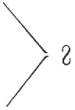
...But the psychical series constitutes the "orga-
nisers," and the "concomitance" of the latter signi-
fies for the "physical series"-for the workers-
nothing but dependence....
nisers," and the "concomitance" of the latter signi-
fies for the "physical series"-for the workers-
nothing but dependence....
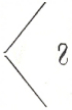
[128]...Thus, according to Wundt, philosophy
should transcend the bounds of experience, "supple-
ment" the latter. The philosophical analysis needs
to be continued until we obtain the idea of a unity
which embraces both series that are independent
of each other. Having expressed this view, Wundt
immediately hastens to make an important reserva-
tion for himself: he declares that we can conceive
of the unity of the world either as a material unity
or as a mental unity: a third solution of the
problem does not exist....
problem does not exist....
[129]...Wundt refuses to give the name substance
to his idea of universal unity. He defines it as
the idea of pure reason, i.e., in the Kantian sense.
Just as Kant's God is the idea of the supreme
"forming," non-substantial principle, so also
Wundt's universal unity is the idea of non-sub-
stantial unity, thanks to which all phenomena
acquire vital meaning, indisputable value. In the
light of this idea, there disappears the "empty and
cheerless" philosophy which sees in the outward
order of phenomena, in their mechanical connec-
tion, the true essence of the latter. In its place
we obtain the view of the cosmic mechanism as
the external covering of spiritual activity and
creation....
[130]...In this connection, Wundt strongly
emphasises the element of actuality. He reduces
the idea of universal unity, of the "foundation of
the world," to the idea of a universal will....
emphasises the element of actuality. He reduces
the idea of universal unity, of the "foundation of
the world," to the idea of a universal will....
[131]...We shall not enter on an analysis of
his proposed formulation, nor shall we explain
his theory of "voluntarism"....
his theory of "voluntarism"....
...Consequently, the ideologists of the modern
vanguard of the capitalist bourgeoisie cannot
vanguard of the capitalist bourgeoisie cannot
What about
speak of any "permanent" organised principles
but, on the contrary, have to describe the latter as
but, on the contrary, have to describe the latter as
hauer ?
something extremely changeable, something that
is eternally in a state of motion....
is eternally in a state of motion....
XII
EMPIRIO-CRITICISM
[133]...Wundt's criticism had no crushing
force; it struck at an imaginary target. Wundt's
appearance on the scene and the subsequent reac-
tion from the camp of Avenarius'[6] disciples did
not signify a conflict between the philosophies
of two different classes or two large groups of one
and the same class. The socio-economic background
of the philosophical contest in question was, in
of two different classes or two large groups of one
and the same class. The socio-economic background
of the philosophical contest in question was, in
this case, the comparatively insignificant difference
between the most advanced and the somewhat less
advanced types of modern capitalist organisa-
tions....
advanced types of modern capitalist organisa-
tions....
[134]...We should say more: the empirio-critic-
al philosophy should be understood primarily as
an apologia for the idea in question. The concept
of functional dependence is a denial of causal
dependence....
an apologia for the idea in question. The concept
of functional dependence is a denial of causal
dependence....
really??
[135-136]...Heffding's conclusion must, in gen-
eral, be considered correct. Only his reference to
"motives of expediency" is unfortunate: these
motives are vague and indefinite.
eral, be considered correct. Only his reference to
"motives of expediency" is unfortunate: these
motives are vague and indefinite.
it does not
follow from
this that func-
tionality
cannot be a
variety of
causality.
Avenarius, in this case, was merely making
a concession to materialist phraseology, a conces-
a concession to materialist phraseology, a conces-
sion determined by his social position. ...To many
people the views of the "parallelists" might appear
to be materialist in comparison with vulgar spiri-
to be materialist in comparison with vulgar spiri-
tualism. The same applies to the views of empirio-
criticism. The possibility of their coming close
to materialism is particularly strong.... And wide
sections of the reading public have formed the
opinion that empirio-criticism is a materialist
school of thought. More than that, even expert
philosophers judge it erroneously: Wilhelm Wundt
himself, the patriarch of modern philosophy, called
it "materialism". Finally, what is most interesting
of all, the empirio-critics, too, while dissociating
themselves from materialism, at the same time
sometimes use its terminology, and sometimes
even begin as it were to waver in their anti-material-
ist views....
a lie!
why? You
have not
understood
this!
aha!
[137]...Such is the real background that inspired
empirio-criticism with the idea of classifying
human cognition on the basis of the principle of
"biological" classification. But this sort of "biol-
ogy," we repeat, has nothing in common with
materialism...
empirio-criticism with the idea of classifying
human cognition on the basis of the principle of
"biological" classification. But this sort of "biol-
ogy," we repeat, has nothing in common with
materialism...
[138-139]...dualism-according to Avenarius-
is the fruit of a certain process of our abstracting
thought-"introjection"....
is the fruit of a certain process of our abstracting
thought-"introjection"....
But the antithesis of the "external" and "inter-
nal" world is the purest fiction.
nal" world is the purest fiction.
An analysis of this antithesis is extremely
important; it should lead to substantiating the
monist world outlook. Commentators of Avenarius'
system of philosophy strongly stress this point.
"By exposing the impermissibility of introjection,"
one of them says,[7] "two aims are achieved...."
important; it should lead to substantiating the
monist world outlook. Commentators of Avenarius'
system of philosophy strongly stress this point.
"By exposing the impermissibility of introjection,"
one of them says,[7] "two aims are achieved...."
[140]... the subordinate organiser, if his "abso-
lute" viewpoint is adopted, i.e., if he is regarded
as an organiser independent of the "will" controll-
ing him, is confronted also merely by a "thing,"
or "body," in the shape of the workers. But let us
take another case: for the supreme "will," the
subordinate organiser is not only one who is orga-
nised, but one who organises.... The former "object,"
suspicious!
A cheap
explanation
with no ana-
lysis of the
substance!
now converted into "subject," "organises" matter:
man assimilates a tree, but a tree transformed, the
"notion" of tree....
man assimilates a tree, but a tree transformed, the
"notion" of tree....
[141-142]..."the fullness of human experience"
is also proved in Avenarius' theory of principal
co-ordination....
is also proved in Avenarius' theory of principal
co-ordination....
...In Avenarius, like in Wundt, the "series"
turn out, in essence, to be "incommensurable."
And instead of the materialist world outlook
that one would expect after the categorical state-
ments about "the fullness of experience," views
are expressed testifying to the idealist sympathies
of empirio-criticism...
turn out, in essence, to be "incommensurable."
And instead of the materialist world outlook
that one would expect after the categorical state-
ments about "the fullness of experience," views
are expressed testifying to the idealist sympathies
of empirio-criticism...
But Wundt and Avenarius part company on
the road of idealist constructions. The author of
The System of Philosophy reveals a fancy for
"Kantian" motives. The author of The Human
the road of idealist constructions. The author of
The System of Philosophy reveals a fancy for
"Kantian" motives. The author of The Human
Concept of the World proclaims views which bring
him close to the position once taken by Berkeley.
him close to the position once taken by Berkeley.
Let us hasten to make a reservation. We do not
at all intend to assert that the works of the Bishop
of Cloyne determined Avenarius' viewpoint, that
they had a direct influence on him. But the simi-
larity of the idealist positions of both philosophers
is indubitable. The afore mentioned theory of
at all intend to assert that the works of the Bishop
of Cloyne determined Avenarius' viewpoint, that
they had a direct influence on him. But the simi-
larity of the idealist positions of both philosophers
is indubitable. The afore mentioned theory of
principal co-ordination, taken as a whole, is evi-
dence of this similarity.
dence of this similarity.
With the same straightforwardness as Berkeley,
Avenarius presents the thesis that there are no
objects outside the subject. Each "thing" must
necessarily "be related" to the central nervous system,
which plays the role of functional centre....
Avenarius presents the thesis that there are no
objects outside the subject. Each "thing" must
necessarily "be related" to the central nervous system,
which plays the role of functional centre....
[144]...The supreme "leader" does not figure,
tikov is un-
der a misap-
prehension,
not even in the shape of the Kantian idea of reason,
Kant's "form," or in the shape of Wundt's "univer-
sal unity." Nevertheless, he is there, and is moreover
the chief element of the philosophical system.
All phenomena are regarded precisely from his
Kant's "form," or in the shape of Wundt's "univer-
sal unity." Nevertheless, he is there, and is moreover
the chief element of the philosophical system.
All phenomena are regarded precisely from his
point of view. His "invisible" presence is postulated
by the unusually high appraisal of the organisatory
principle, presented parallel with the conception
of organised organisers. And in the general picture
of the world resulting from Avenarius' philosophic-
al discourses, it is precisely the organisatory
principle, presented parallel with the conception
of organised organisers. And in the general picture
of the world resulting from Avenarius' philosophic-
al discourses, it is precisely the organisatory
character of the organising factors that comes
into the forefront....
For Avenarius the world represents an agglom-
erate of central nervous systems. "Matter" is
absolutely deprived of all "qualities," whether
a "primary" or "secondary," which at one time were
considered its inalienable property. Absolutely
everything in matter is determined by the "spirit"
or, to use the terminology of the author of the
erate of central nervous systems. "Matter" is
absolutely deprived of all "qualities," whether
a "primary" or "secondary," which at one time were
considered its inalienable property. Absolutely
everything in matter is determined by the "spirit"
or, to use the terminology of the author of the
hension
Critique of Pure Experience, by the central nerv-
ous system....
ous system....
[145] The viewpoint of idealism in the style
of Berkeley is put forward with great consistency
of Berkeley is put forward with great consistency
by the author of the Critique of Pure Experience....
[146]...Mach's theory of the "ego" as a logical
symbol....
symbol....
Mach, like Avenarius, knows two "series"-the
psychical and the physical (two kinds of combina-
tions of elements). As with Avenarius, these
series are incommensurable and at the same time
represent nothing but a fiction of our thought.
Alternately, the monist and the dualist viewpoint
is put forward: alternately the intermediary orga-
nisatory links are described as the organised, and
as the organising principle. And, as with Avena-
rius, in the final analysis the dictatorship of "the
organisatory will" is proclaimed. An idealistic
picture of the world is drawn: the world is a com-
plex of "sensations."
rius, in the final analysis the dictatorship of "the
organisatory will" is proclaimed. An idealistic
picture of the world is drawn: the world is a com-
plex of "sensations."
hension
aha!
[147]...Mach's objection cannot be called valid.
The central concept of his philosophical system,
the famous "sensation," is by no means a denial
The central concept of his philosophical system,
the famous "sensation," is by no means a denial
hension
either of the organisatory principle or of the
supreme organisatory principle.... Mach was prompt-
ed in his criticism of the conception of the "ego"
supreme organisatory principle.... Mach was prompt-
ed in his criticism of the conception of the "ego"
by the view of the subordinate organisers as the
organised "mass"....
organised "mass"....
[148-149]...Besides dealing with the specula-
tive constructions of Wundt, Avenarius and
Mach, we could, for example, subject to analysis
the views of such prominent representatives of
tive constructions of Wundt, Avenarius and
Mach, we could, for example, subject to analysis
the views of such prominent representatives of
modern West-European philosophy as Renouvier,
Bradley and Bergson.
Bradley and Bergson.
The sphere of philosophy is a veritable "Bastil-
le" of bourgeois ideology.... It is necessary to bear
le" of bourgeois ideology.... It is necessary to bear
in mind that, for their part, the bourgeous ideolo-
gists are not sleeping, but are strengthening their
position. At the present time, they, are even im-
bued with the conviction that their position is
absolutely impregnable. The "idealist" sympathies
of certain literary writers who take their stand
under the banner of Marxism, in turn, create
particularly favourable soil for such a convic-
tion....
TABLE OF CONTENTS
XI. Wundt |Ostwald| . . . .107 |not in the book The entire
book is an example of extreme vul-
garisation of materialism. Instead of a concrete analysis
of periods, formations, ideologies -empty phrases about
"organisers" and ridiculously strained, absurdly false
comparisons.
A caricature of materialism in history.
And it is a pity, for there is an attempt made in
the direction of materialism.